
A refrigerator stops cooling on a Tuesday night. A dryer suddenly refuses to heat up. In that moment, nobody’s thinking about brand names or warranty fine print. They just want the problem diagnosed correctly and fixed safely. That’s really what appliance repair comes down to, and understanding a bit about how it works can save you both money and a lot of frustration.
Repair or replace? How to actually decide
Appliances aren’t cheap, so it’s worth pausing before assuming a broken one needs to go straight to the curb. A new fridge, washer, or range can run into the thousands of dollars, and replacing one before its time usually isn’t necessary. Most of the time, a broken appliance comes down to one failed part: a control board, a heating element, a worn belt. Not a total system failure.
A general rule of thumb used across the repair industry is the 50% rule: if the repair cost is less than half the price of a new comparable unit, and the appliance is under eight to ten years old, repair usually makes more financial sense than replacement. ENERGY STAR’s appliance guidance is a useful independent reference point here, especially for weighing energy efficiency against the cost of keeping an older unit running.
The repairs homeowners run into most often
Refrigerator issues are usually about cooling: a fridge that isn’t holding temperature, an ice maker that’s stopped working, unusual noises, or water pooling on the floor from a blocked defrost drain. Washer problems tend to cluster around three symptoms: won’t spin, won’t drain, or leaks from somewhere you can’t quite pinpoint. On the dryer side, a unit that runs but doesn’t heat, or one that needs two or three cycles to dry a single load, almost always points to a restricted vent or a failed heating element rather than the whole machine being done for.
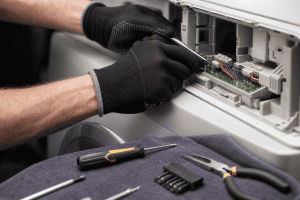 Dishwashers bring their own headaches: pooling water at the bottom, dishes that come out cloudy or still dirty, or a unit that won’t start at all. Ovens and stoves that heat unevenly, won’t reach temperature, or have a broken igniter can usually be repaired rather than replaced outright. Microwaves deserve extra caution. A sparking interior or a unit that hums but won’t heat involves high-voltage capacitors that store a charge even when unplugged, so this is genuinely not a DIY repair. Range hoods that stop venting properly can quietly turn into a bigger air quality problem in the kitchen over time, since grease and moisture have nowhere to go.
Why brand knowledge actually matters
Parts, error codes, and internal designs vary a lot between manufacturers, which is why appliance repair really is a specialization rather than a one-size-fits-all trade. Technicians who work across brands regularly see Whirlpool, Maytag, KitchenAid, JennAir, Amana, LG, Samsung, Frigidaire, Electrolux, Bosch, GE, Hisense, Midea, and Thor Kitchen appliances, among others. Whether it’s a Samsung fridge throwing a persistent error code or a Bosch dishwasher that’s stopped draining, knowing the brand’s quirks is often what separates a same-day fix from hours of guesswork. For manufacturer-specific troubleshooting steps, GE Appliances’ own support video library is a solid starting point before assuming the worst.
 What to check before you call anyone
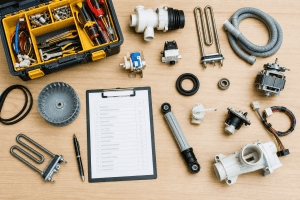
A few things are worth ruling out yourself first. Is the appliance actually receiving power? Has a breaker tripped? Is a dryer vent visibly blocked? Is a fridge door seal cracked or not sitting flush? These take a couple of minutes to check and occasionally solve the problem outright. Beyond that, most issues involve internal components that need a trained technician, both for safety and because guessing wrong on a part can turn a $150 repair into a $500 one.
Getting reliable service in Simcoe County and the GTA
Homeowners across Barrie, Bradford, Newmarket, Aurora, Richmond Hill, Vaughan, Markham, Innisfil, East Gwillimbury, New Tecumseth, and the wider Simcoe County and Greater Toronto Area deserve technicians who show up on time, explain pricing clearly before starting work, and stand behind what they fix. This part of Ontario has grown fast over the past decade, and that growth has brought a real need for local, responsive appliance repair rather than a call center in another province.
If you’re in the area and want to compare notes on a specific repair, Appliance Forever services the region and works across all the brands listed above. But regardless of who you call, the same advice holds: get a real diagnosis before authorizing a fix, ask what the failure rate is on that specific part, and don’t assume a working appliance is a lost cause just because one component gave out.