TL;DR
- England’s Approved Document L sets 1.4 W/m²K as the limiting standard for a replacement window. Thermally broken aluminium and decent uPVC both clear it, so frame material is not what decides whether your windows pass.
- The glazing unit does most of that work. A 4/16/4 sealed unit with argon and a low emissivity coating carries the number. The frame is the part that leaks it back.
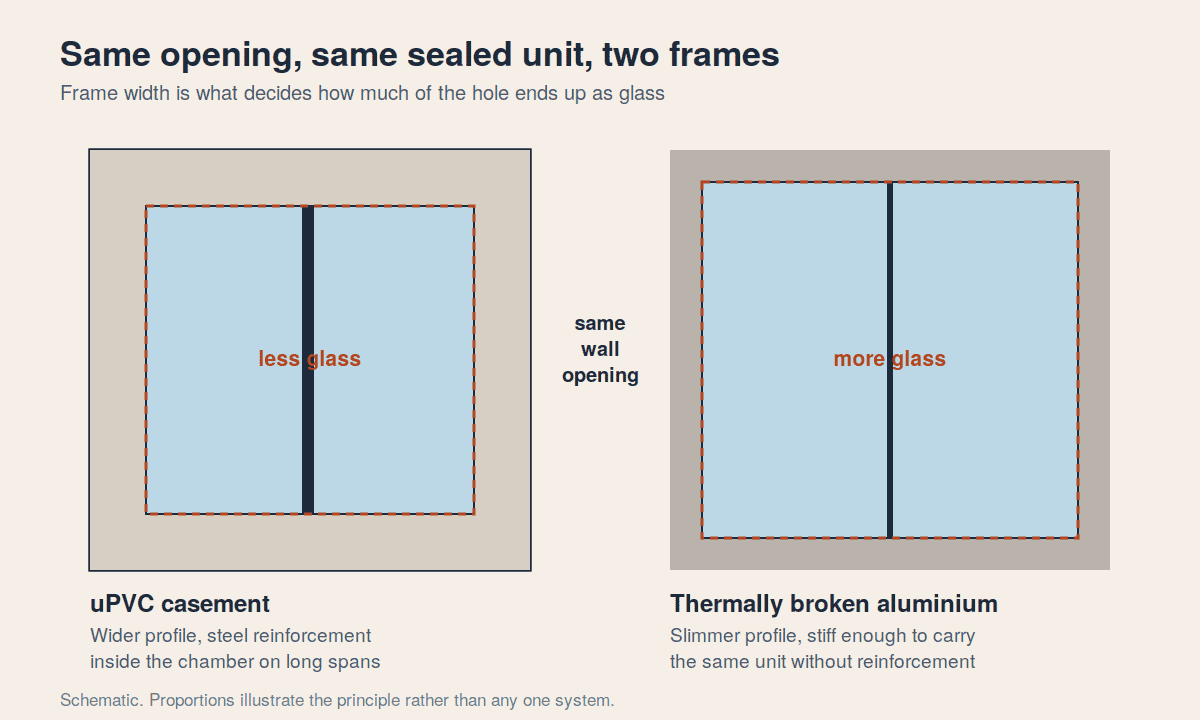
- What the aluminium premium actually buys is span and sightline. Thermally broken profiles can carry up to 20% more glass area than frames made of other materials in the same opening.
- Read the warranties to find where the risk sits. Profiles and hardware are commonly covered for 10 years, the installation behind them for 2.
Short version: aluminium does not buy you a warmer window. It buys you a bigger one, and the bill lands mostly on the glass and the fitting rather than the metal.
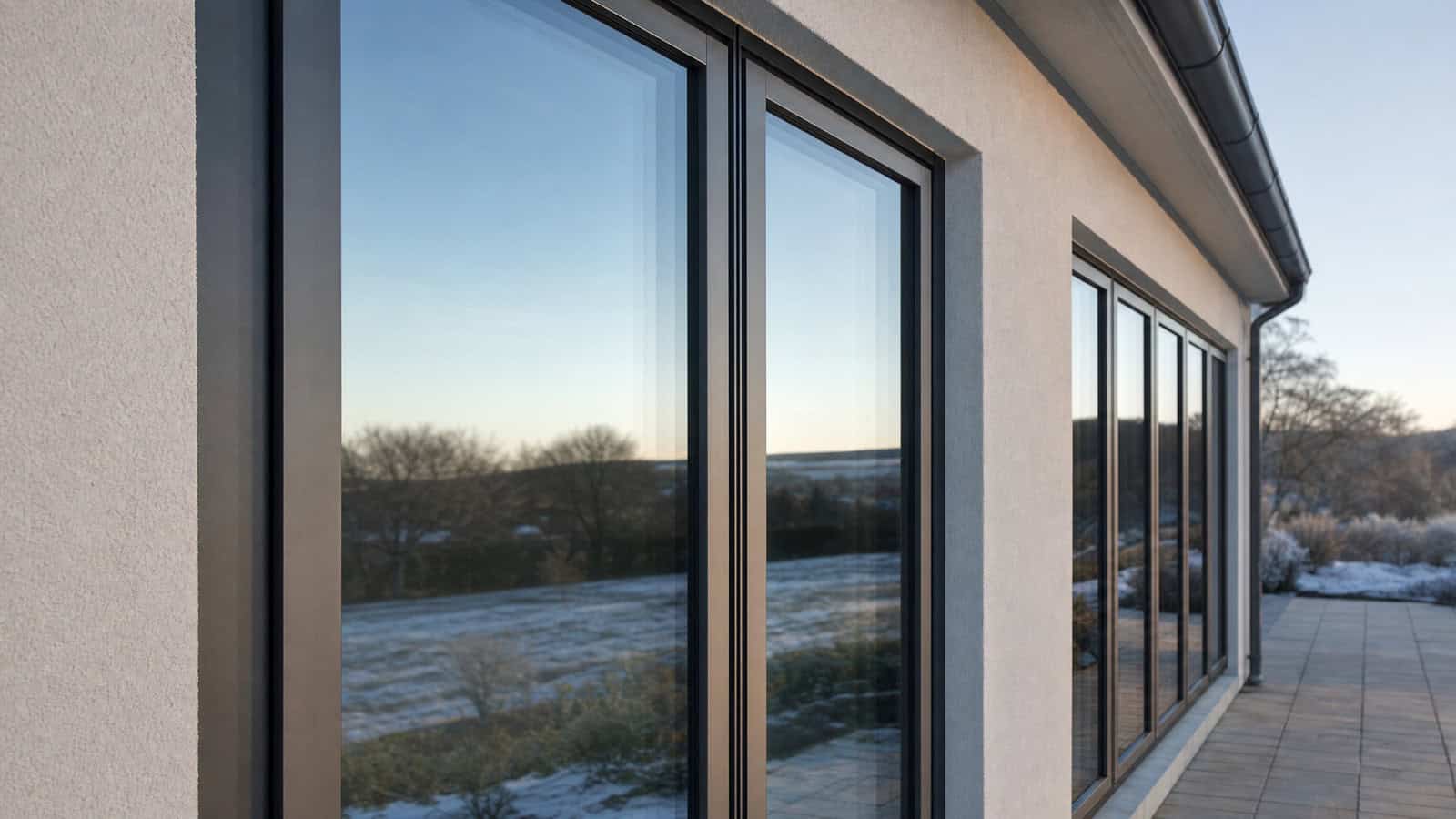
Ask two suppliers whether you should choose uPVC or aluminium and you will get two confident answers and no numbers. The useful version is duller. The two materials cost different amounts and do slightly different jobs, and neither of them is the thing that makes a window warm. A modern thermally broken aluminium window and a well specified uPVC one land under the same regulatory ceiling. What the price gap buys is a narrower frame, a longer span and a finish that survives strong sun, and most of the money goes on the glass and the fitting rather than the metal.
What actually separates the two materials
Stiffness per millimetre of frame. That is the whole difference, and everything else follows from it.
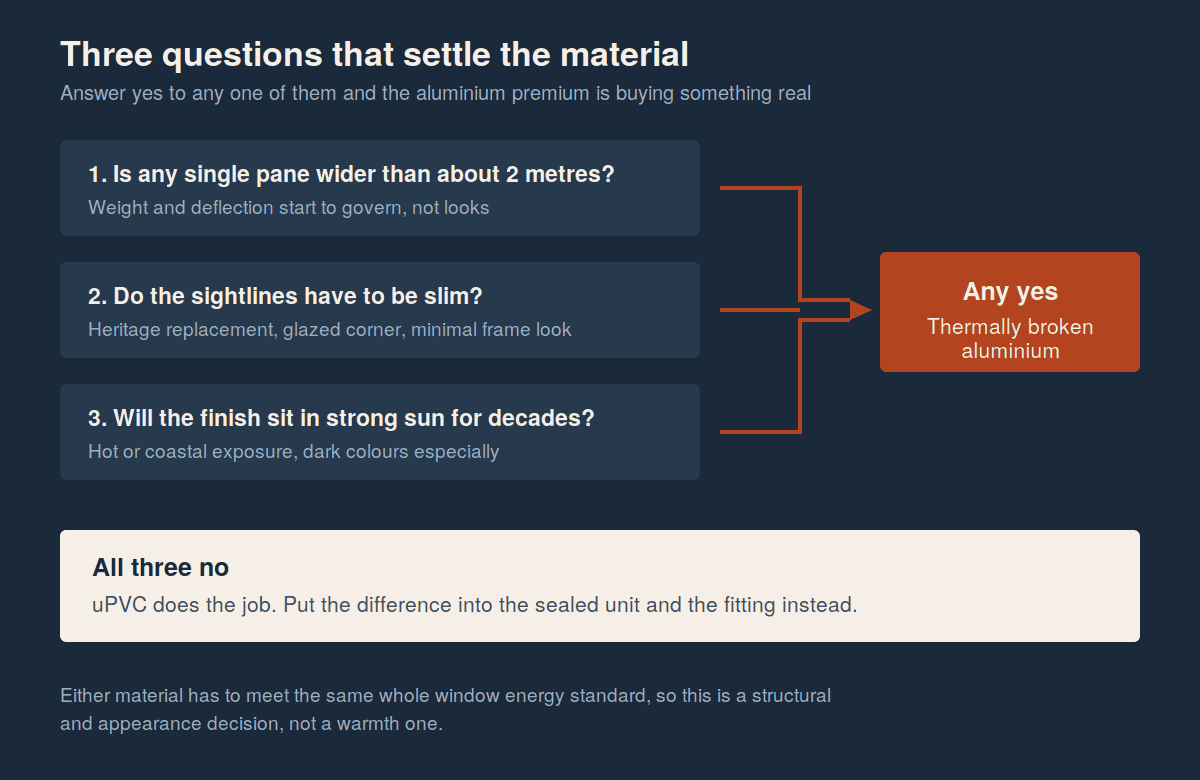
Aluminium is structurally strong enough that a profile can be slim and still hold a heavy sealed unit across a wide opening without sagging or bowing in summer heat. uPVC is not, so a uPVC frame of the same span has to be fatter, and past a certain size it needs steel reinforcement inside the chamber to stay straight. That is why a six metre run of sliding glass is nearly always aluminium and a standard bedroom casement is nearly always uPVC. It is a structural decision dressed up as a taste decision.
The second difference is what happens to the surface. Powder coating on aluminium is a baked finish on a metal that does not rot, warp or go chalky. uPVC in strong sunlight does eventually shift colour, and dark uPVC shifts fastest because it runs hotter. In a mild climate that takes decades. In a hot coastal one it does not.
Where the money actually goes
A window quote is four or five lines, and switching material changes fewer of them than people expect.
| Line on the quote | What it is paying for | Changes if you switch material? |
|---|---|---|
| Glazing unit | The sealed unit itself: pane thickness, cavity width, gas fill, coatings | Barely. The same unit fits either frame, and it is usually the single largest line |
| Frame profile | Extrusion, thermal break, finish | Yes, and this is where the premium lives |
| Hardware | Hinges, locks, rollers, gaskets | Somewhat. Heavier panels need heavier gear, so it tracks panel size more than material |
| Fabrication | Cutting, machining and assembling the frame to your opening | Yes. Aluminium is cut and crimped rather than welded, and the tolerances are tighter |
| Installation | Removal, fitting, sealing, making good | Not by material, but heavily by panel weight and access |
Two consequences fall out of that table. The first is that a quote which is much cheaper than its rivals is almost never cheaper on the frame, because the frame is a bought in extrusion and everyone pays roughly the same for it. It is cheaper on the glazing unit or on the fitting. The second is that comparing two quotes on the headline number tells you nothing until you have made them describe the same sealed unit.
When the aluminium premium is worth paying
When the opening is large, when the frame has to be thin, or when the finish has to survive real sun. Outside those three cases the premium buys you appearance, which is a legitimate thing to buy but should be priced as such.
The large opening case is the clearest. Once a single pane gets heavy, everything depends on whether the frame stays square under its own weight and whether the fabrication was accurate enough for the panel to keep sealing after a few hundred cycles. A workshop holding a tolerance under half a millimetre on a long run will still be sealing in year five. One working to a couple of millimetres will not, and the symptom shows up as a draught rather than as a visible fault, so nobody connects it back to the fabrication.
That is why the strongest suppliers in any given market tend to be regional workshops rather than national brands, and why it is worth asking what a supplier actually does in house. A fabricator advertising Aluminium Tanger on the north Moroccan coast and one working out of a unit in the Midlands are selling the same thing underneath the marketing: machine time, a saw that cuts square, and somebody who will come back when a panel drops. Ask which of those they own and which they buy in.
The number that decides whether either of them passes
Both materials are measured against the same standard, and it is a low bar that plenty of cheap products still miss. In England the relevant rules sit in Approved Document L, which sets the energy standards a replacement window has to meet, and puts the limiting U-value for one at 1.4 W/m²K. A well specified thermally broken aluminium system will be quoted at or below that figure. So will a good uPVC one.
The reason both can hit it is that the glass is doing most of the work. In a typical 4/16/4 unit, the two panes, the cavity, the gas fill and the low emissivity coating between them account for the bulk of the resistance, and the frame is a comparatively small area that either preserves that or throws it away. A frame with no thermal break throws it away. This is the single most common misunderstanding in the whole comparison: people argue about the metal when the specification that matters is printed on the glazing line of the quote.
What you give up, either way
uPVC gives up span, slimness and long term colour stability. Aluminium gives up nothing structurally, but it costs more up front and it is unforgiving of bad fabrication, because a metal frame has no give in it.
There is one genuine long horizon argument for aluminium that rarely makes it into a showroom conversation. The metal is recovered and remelted at the end of a building’s life using a fraction of the energy that made it originally, and European Aluminium puts the share of all aluminium ever produced that is still in circulation at around 75%. The same body notes that thermally broken profiles can carry up to 20% more transparent area than frames in other materials, which is the sightline argument stated as a number rather than as taste.
What to check before you sign
- The glazing spec in full, written out. Pane thicknesses, cavity width, gas fill, which surface carries the coating.
- The quoted whole window U-value, not the glass only figure. They are different numbers and suppliers quote whichever flatters them.
- Whether the aluminium system is thermally broken. If the quote does not say, assume it is not.
- Two warranty lengths, separately: one for profiles and hardware, one for the installation. Ten years on the first and two on the second is normal, and the gap is where most complaints live.
- Who fabricates. A supplier that assembles in its own workshop can fix a bad panel in a week. One that orders finished frames cannot.
None of that is specific to windows. Comparing quotes line by line rather than headline to headline is what separates a real price from a number on a page in any trade, which is the same argument as the one about what belongs in a managed service quote.
The choice is less dramatic than the sales pitch on either side. If your openings are ordinary and your climate is mild, uPVC does the job and the money is better spent on the glass. If you are putting in something wide, something thin framed, or something that will spend thirty years in strong sun, aluminium is the material that holds its shape, and the premium is buying structure rather than warmth. What neither material will do is rescue a cheap sealed unit or a careless fitting, which is where almost every disappointing window actually goes wrong.