TL;DR
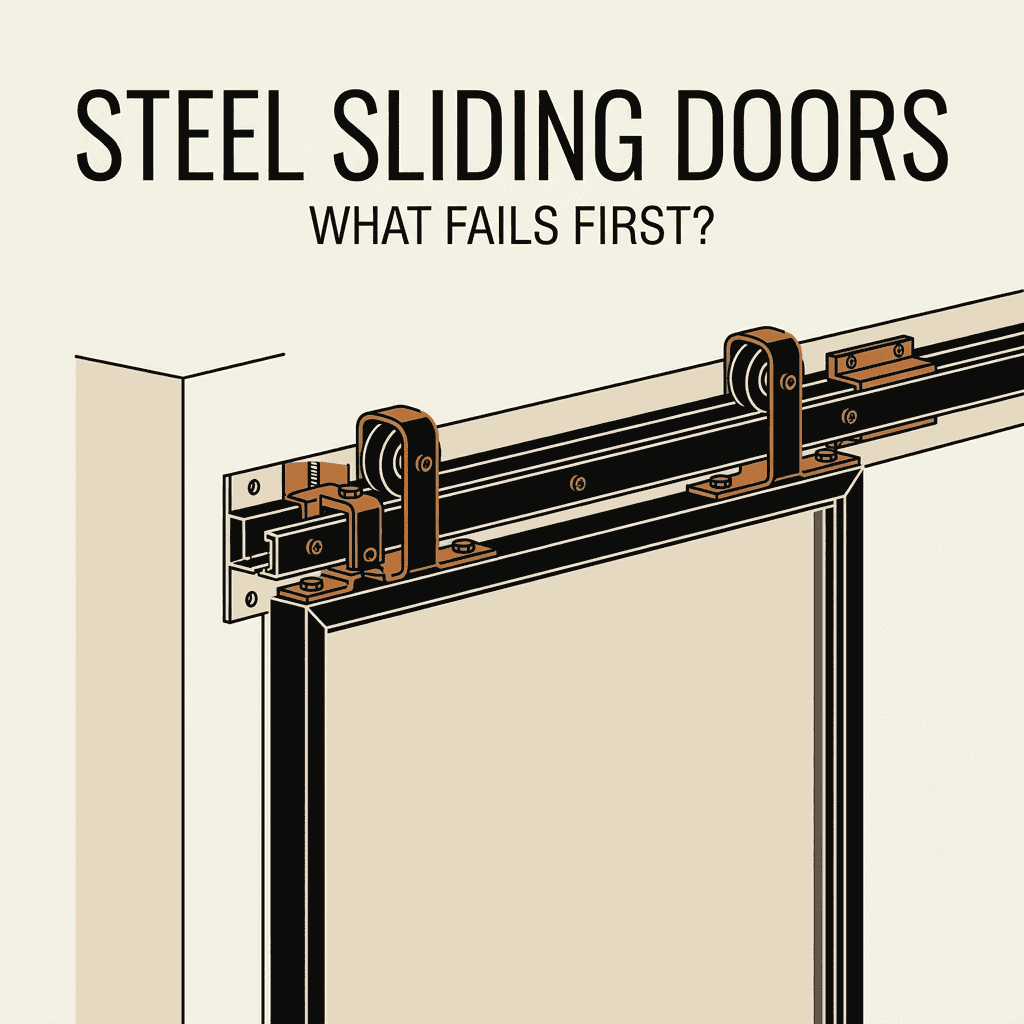
- A standard UK internal door leaf is 762mm x 1981mm and weighs a few kilos. A glazed steel sliding door can run well past 2.4m tall and carry a significant weight in glass, which is why the frame and the track, not the finish, decide whether it still works in year ten.
- Steel’s advantage is rigidity, not hardness: it holds a slender profile around a large pane without flexing, which is what produces the narrow-sightline look people actually want.
- Any glazing in or beside a door sits in a critical location under Approved Document K and has to be safety glass. That is a building regulations requirement, not an upgrade.
- The failure people report years later is almost never the steel. It is alignment and hardware on a system that was measured or installed loosely.
Short version: the material gets all the attention and the track does all the work. Judge a sliding door on the parts you cannot see.
Ask why a steel sliding door costs several times what a stock interior door costs and you will usually be told “because it’s steel.” That is true and it is not the useful answer. The useful answer is that a sliding door is a moving structural element carrying glass, and almost everything that determines whether it still runs sweetly in a decade happens in the frame geometry and the track, neither of which is visible once the door is hung.
Why steel holds a slender frame when other materials cannot
Steel wins on stiffness, which is a different property from strength and the one that matters here. A frame around a large pane of glass has to resist bending under its own weight and under the load of the glazing. Steel’s high modulus means a narrow section resists that deflection where an equivalent uPVC or thin aluminium section would need bulking out to do the same job.
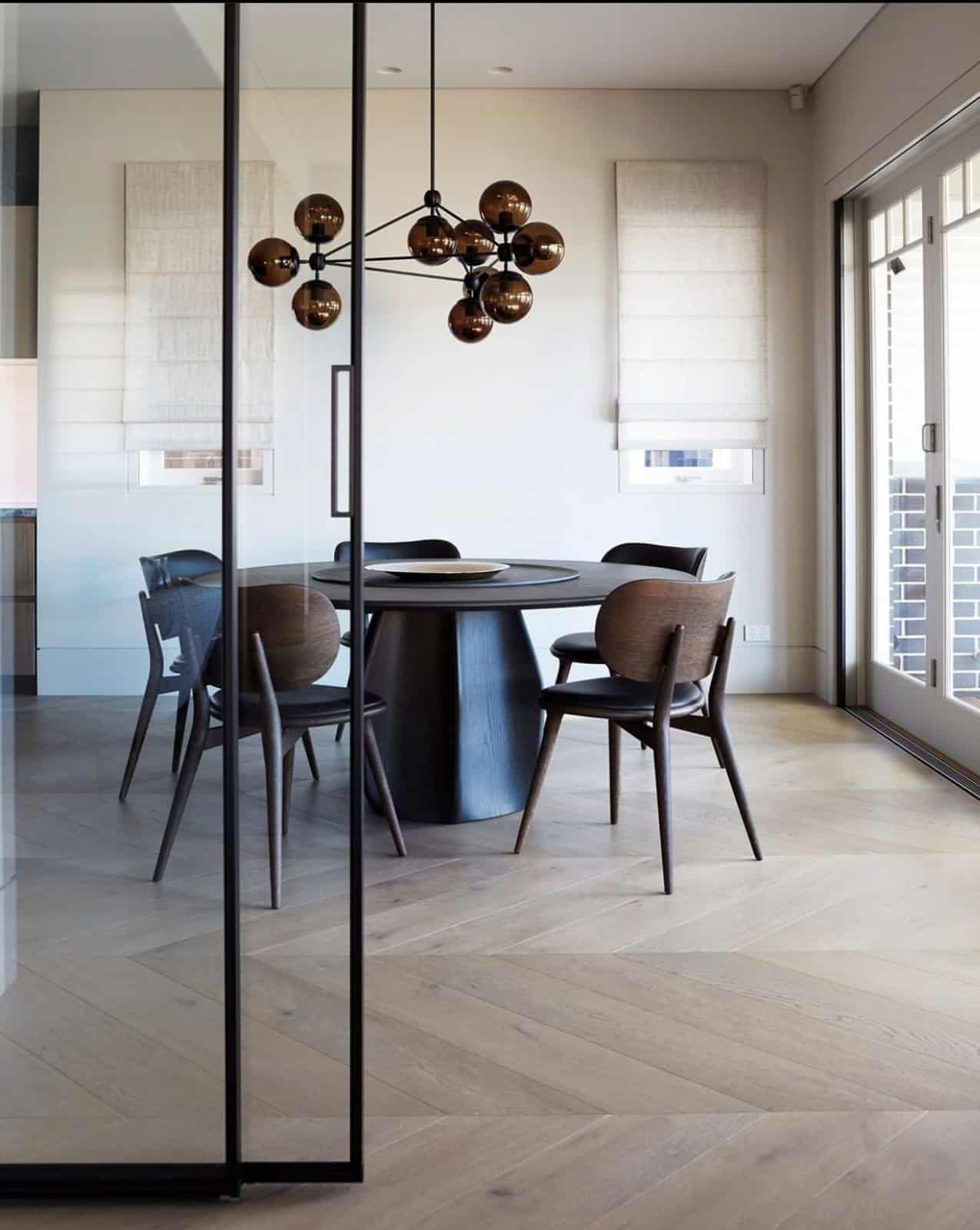
That is the whole visual argument for steel, and it is worth stating plainly: the thin black lines people are buying are a consequence of the material’s stiffness, not a style applied on top of it. The Steel Construction Institute’s material guidance covers why the same property makes steel the default in structural framing, and the logic scales all the way down to a door frame.
| Frame stiffness | Typical sightline | Behaviour over a wide opening | Character | |
|---|---|---|---|---|
| Steel | Highest of the three | Slimmest for a given pane | Holds shape; suits tall glazed panels | Weight and permanence; the industrial-heritage look |
| Aluminium | Good, lower than steel | Slim, usually a little wider than steel | Fine at most residential sizes | Clean and contemporary; lighter feel |
| uPVC | Lowest | Widest, sections need bulk | Profile grows as the pane grows | Economical; rarely reads as architectural |
None of that makes aluminium or uPVC wrong. It makes them different answers to different briefs, and the same trade-off runs through glazing generally, as we found when we looked at what the price difference between aluminium and uPVC windows actually buys. If the brief is a slim black frame around a big pane that looks like part of the building, steel is the material that gets there without compromise.
The glazing is regulated, and most buyers do not know it
Glass in a door, or in a panel beside a door, sits in what the building regulations call a critical location. That means it has to be safety glazing, typically toughened or laminated, and it has to break safely if it breaks at all. The requirement is set out in Approved Document K, which absorbed the old Part N glazing guidance.
This is not a specification you should have to ask for. Any manufacturer working properly in this category treats it as the baseline. It is worth raising anyway, for one reason: it tells you quickly whether the person quoting understands the product as a building component or as a piece of furniture.
Where sliding systems actually fail
They fail at alignment, and alignment failures trace back to measurement.
A sliding door has to stay square to a track over a span, with the head fixing carrying the load. If the opening is out of true and the system was not set to accommodate it, the door will still work on handover day and will start to drag, bind or drop within a year or two. Nothing about the steel has failed. The geometry was wrong from the start and the hardware has been slowly telling you so.
This is why fabrication tolerance and installation matter more than the brochure suggests:
- Measurement has to account for the opening as built, not the opening as drawn.
- The head detail has to be into something structural that can carry the running load without deflecting.
- The hardware has to be specified for the actual weight of the door leaf, with the glass in it, not for a nominal figure.
- Adjustment should exist in the system, so a building that settles slightly does not mean a door that binds permanently.
Black Steel Doors builds its Internal Sliding doors around exactly this sequence, treating measurement, fabrication and installation as one system rather than three handovers, which is the practical reason the finished door keeps operating the way it did on day one.
Seeing one move is more informative than any spec sheet. A good system is quiet, has no lateral wobble in the leaf, and stops without a bounce.
What a warranty is actually telling you
Read what the warranty covers rather than how long it runs. A long warranty on the coating and nothing on the running gear tells you where the manufacturer expects trouble. Cover that includes installation is a stronger signal than cover on the product alone, because installation is where the risk genuinely sits.
The questions worth asking before you buy
- What is the finished weight of the leaf with the specified glass, and what is the hardware rated to carry?
- What is the head fixing going into, and has anyone checked it can take the load?
- Is the glazing specified as safety glass, and which type?
- Who measures, and does the same company install?
- What does the warranty cover, and does it extend to the installation?
A supplier who answers those without hesitation is quoting on a system. A supplier who moves the conversation back to finishes is quoting on a product.
The part that lasts
Steel and glass has outlived every interior trend it has been fashionable alongside, from genuine factory conversions through to the current appetite for slim black framing in period houses. That durability is partly aesthetic and mostly physical: a well-made steel door stops being a fitting and starts being part of the fabric of the building.
Which is the honest reason to spend on one. Not because it looks striking on the day it goes in, but because it is still square, still quiet and still running a decade later, when the rest of the room has been redecorated twice.